Sunday, September 29, 2019

RANDOM SIGNALS / UNIDEN 980SSB VS. PRESIDENT MCKINLEY


MISC END OF THE MONTH STUFF


Time continues to blaze a path towards 2020 and the Halloween decor in all the stores seem kinda old now as they've been up since Labor day, and I had a couple of things to note before we're into October. First, there's a YouTube video of one man's unique mobile setup which was posted on another radio forum. Next up is my radio comparison.


ODD USE OF LITTLE CAMERA IN THE MOBILE SHACK


UNIDEN 980SSB VS. PRESIDENT McKINLEY

I've been doing an A/B comparison in the mobile shack between the 980 and the McKinley while I still have both radios. Here's a few things I noted:


  • The 980's NB doesn't seem to work as well as the McK. It should, but it didn't.
  • The display in the McK is easier to see than the one in the 980. I tried every color option, playing around with brightness/contrast settings, but unless I was driving at night, it was hard to view the 980's display - especially if the radio wasn't directly in front of me. The orange colored background of the McK with black numbers is much better (or my old eyes at least).
  • Because the Uniden is larger, it takes up more space than the McK
  • I really had to use an external speaker on the 980 while the front-firing speaker in the President was all I needed.
  • Even though the microphone pinout is identical,  the voltage on Pin 6 is NOT. There's 8v on the Uniden and 11v on the President, so the President hand mic would not work on the 980SSB. The radio will key, but you won't get audio. It's probably not that big of a deal however I was thinking of trying Uniden's wireless microphone on the President and I'm wondering if that extra 3v in the McK will harm it or not.
  • Regarding cosmetics, of course, the 980 is a nicer looking radio
  • NOAA WX station reception was equally MEH on both units
  • Clarifier mod's are pretty much the same
  • The President's auto-swr is nice
I didn't go into this wanting to like one radio better than the other but I guess I came out of this A/B test liking the President McKinley more than the 980SSB. When purchased NEW the McKinley sells for $179.95 while the Uniden can be had for $119 including shipping (if you can navigate through all of those BS EBay ads trying to sell you one for $180-$250).
So just this short update before I don my pumpkin face for October -

73

Woody


Saturday, September 21, 2019

THE ARCHIES GO NUMBER ONE 50 YEARS AGO THIS MONTH


Sheesh... I knew it was popular, but didn't realize this was the number one song of 1969, as well, it reached the Billboard number one 50 years ago this month.


Sunday, September 15, 2019

QSO PARTIES ARE "AFOOT".


 Looks like various States are having their QSO Party this weekend. I've heard people around Texas and Alabama on 40m so get yer ya-ya's to a radio and call CQ.
  
________________________________________


Saturday morning I saw an online post from a guy in Texas who was ON-THE-AIR on 40 meters. I figured I'd hunt around with the TS-2000 and see what I could hear so I tuned my MLA to 7230 and heard a fella from Bexar County (San Antonio area) calling CQ and I tried to come back to him. Nothing. Nada. Zippo.

I moved up the dial a little and heard another station but like the first try it was 
Nothing. Nada. Zippo.

This seemed odd because even though I'm using an indoor MLA if I can hear them - they can usually hear me. So I switched to my inline watt/swr meter/dummy load (just to check) and could not see any output from my rig. Scratching my head, I realized that while it had been awhile since I used the rig, perhaps the watt meter was faulty. So, I put another meter in-line. Nothing. Nada. Zippo

Then I replaced the short coax cables - Nothing. Nada. Zippo

I guess everyone has had their own moment of panic and I certainly had mine. I tried every band (up to 440) and even both A and B radios with no success. AM-FM-SSB = Nothing. Slightly alarmed, I tried a 3rd watt meter. Nothing. Nada. Zippo.

Finally, I took a mental step back in order to get a grip on the situation. I reasoned that I could have inadvertently hit a wrong key or keys on the front panel which may be causing this symptom, but even after checking adjustments that could cause this I couldn't see anything wrong. With a processor laden radio like this it could have been something I did a month ago. Luckily there wasn't  a huge or even moderate investment in memories and settings so I did a full reset and ta da - all was well with the world, and my output was normal once again.

Just to prove my point of "If I hear them they will call" I heard W4UAL calling CQ for the Alabama QSO party and got him on my first try (using 20 watts). I received him with a 5-7 and he gave me a 5-9. Not bad for an indoor MLA...


It's Sunday morning - go make some contacts!


73
Woody


Thursday, September 12, 2019

REVIEW/OVERVIEW: PRESIDENT McKINLEY


Yep, I know - I'm a little late getting to the party, but I recently got my hands on the President McKinley 40 channel am/ssb mobile, and I thought I'd jot down my overall impression as the last newly released rig I'd had so far was President's Lincoln 2 V3.


Well first of all, I procured my transceiver in the used market place ($99) without the factory box and accessories (It did have the microphone). When I received the box and pulled it from the safety of our postal box my first thought was "this box is too freaking light to have a radio in here - I've been had!" but no, the radio was indeed, in the box. The transceiver itself is just a little bitty thing that is no way near the weight of an older CB like the 138XLR. There's nothing wrong with that, it just took me by surprise.

MORON STICKER
I had an immediate pet peeve: The "moron" sticker on top of the radio which tries to help the most moronic of us apply DC power correctly. After all, it uses a standard 3-pin power connector which would make it almost impossible to key incorrectly (unless you were a persistent Moron)


Moving on.... 


There were a couple things that attracted me to this model. Having read and viewed various reviews I was interested in the SWR feature and looked forward to having something in the car with a front-firing speaker. So out of the box and onto the bench it went.


On power up the colorful display lights up and gives you all the information you need to know - What channel you're on, the corresponding frequency (albiet tiny and hard to see), channel activity via S-meter, status of the rf gain control, and whether or not you have the noise blanker or high-cut filters in use.

Compared to the Uniden 980 the overall appearance is rather sparce, (back when I bought a 980 my first thought was "where do I insert my Rolling Stones CD?"). I guess, if I had to put the McKinley into a category I would say that it is "utilitarian", and there's nothing wrong with that.

While everything is aligned at your finger tips my personal preference would have been to reverse the layout by having the speaker on the right side vs. left, but that's just my preference. In any case it was nice to have a front-firing speaker.

The controls at your finger tips are:

  • Fine/coarse Clarifier - Receive only (scroll down for more info)
  • Power / Squelch / ASC - dual potentiometer control also varies RF output
  • Channel selector / Menu -
  • Dual-Watch (ch9/19)
  • MIC GAIN (self explanatory)
Other buttons below display: MODE / PA / WX / NB/ANL/ HiCut.

[I would not have bought this solely for WX, but I was nonetheless happy to have the NOAA back in the vehicle like I had with my Midland 77-290 25 years ago].

By pressing the Channel control in you can toggle around and vary the color of the screen (orange, blue, green), adjust the brightness / contrast, and best of all - turn OFF that annoying key BEEP. If you're not a Roger Beep kinda guy you have the option to turn it off and don't have to go thru contortions to do it.

While toggling around you can also change the receive tone and/or activate the SWR feature. Now this is pretty cool! I first heard about it when I watched the review from "Mikes-Radio-Repair" and thought it was something every rig should have (it is). 

You don't have to switch any thing to "Set", align the needle to one side of the meter and then switch back to SWR (like the BS you normally would), it just does it. 

Rather than further duplicating other reviews I think it's time to stop and give you some links for further details on features it has, and what they do, then I'll continue with my thoughts about it.

CHECK OUT:


  • CB RADIO MAGAZINE'S REVIEW HERE
  • WATCH CBRM's VIDEO REVIEW PT.1 HERE
  • WATCH CBRM's VIDEO REVIEW PT.2 HERE
  • WATCH MIKE'S (OF MIKES_RADIO_REPAIR) CLARIFIER MOD HERE
  • WATCH MIKE'S (OF MIKES_RADIO_REPAIR) TEARDOWN-REVIEW HERE

TO SUMMARIZE:

The President McKinley AM/SSB USA transceiver is a fairly "locked down" CB which only allows you to open the clarifier and no other mods. If they (President) had only one thing that could be done to the rig, picking the clarifier mod was the right choice. I don't have any problems using a radio on the 40 channel FCC spread, but if it has SSB then I want the Clarifier to track on receive AND transmit.

There is another version of the McKinley for the rest of the world, which is the EU model. You can go pretty much anywhere with this one, but from what I've seen, it's not available anywhere in the U.S.


UNIDEN BLUETOOTH MIC
This microphone works okay but is so lightweight that it feels super cheap when holding it, and I'm not confident about how well it will hold up as time goes by with day-after-day use. It's the new standard 6-pin configuration shared by Uniden / President which means you can use the wireless Bluetooth microphone from your 880/980 radio on this model if you want to. 

There is no hokey-pokey "voodoo" magic about getting this to work - it's just like pairing a Bluetooth device to your computer. As long as the pin-out is correct on the piece that plugs into the microphone jack matches (and it does), it should work just fine.

I'm trying to stop comparing every new radio with classic old school equipment (like I did with Uniden Bearcat's 980SSB) because they'll never quite live up to those expectations, but it's hard not to do. Because my description of the McKinley is "Utilitarian" I had to ask myself if I would have spent $180 for a new-in-the-box model? 

No, it just isn't worth it. 

This is a radio that should be selling for  $130 or less. At that price point you really couldn't gripe a lot about the stuff that it's lacking, but @ $180 it's only $45 less than a President Lincoln II  or $69 less than a President Lincoln II+ ( yes, I know they are supposed to be Ham-band only rigs, but I live in the real world).

So that's the review, as well as a big "Thank You" to all the folks (above) who covered the minutia details about this when it first came out...


73

Woody


Monday, September 09, 2019

YOUTUBE PICKS


I've been so busy selling stuff that I neglected my YouTube viewing, so here ya go - My "picks" for early September...


YOUNG SHELDON SEASON 3 PROMO
Someone pointed out in a Worldwide DX forum saw this promo and that they have Sheldon using the school intercom which in itself isn't worth noting, but that intercom happens to me a Madison, and he is talking into a Turner Plus 3 (which isn't even plugged in).


ROBERT NAGY COMPARES THE IC-7610 to a FTdx-101D


FRED'S BACK IN HIS SHED PONDERING THE DEMISE OF CB BASE STATIONS


THE MODERN ROGUE WITH "How a Dead Man Tricked the Nazis and Became a War Hero"


KBR9VBR Does a Retevis RT97 Portable Repeater Field Test as well as Ham Radio Q&A


AmateurLogic.tv with episode 56 of their side column "Ham College" which includes a look at the IC-705 via Japan.


W5KV Takes a look at the Tram 1481 antenna


Sunday, September 01, 2019

MIDLAND'S WALKIE-TALKIE EMPIRE


"TOO MANY OPTIONS"


Welcome to September! Maybe it will cool down by December (😁). I'm sure all eyes and ears are watching the course of the Hurricane. Here's hoping it takes a sharp right turn and goes into the Altlantic where it belongs. And now, the Blog post -

Speaking of "right turns", and continuing on my loose thread on handheld CB's I wanted to take a look at Midland International and their "walkie-talkie Empire". While I've never heard anyone refer to Midland as having an Empire of anything, I think it fits in this situation.

Flipping through a 1967 Midland Dealer catalog I couldn't help but notice the quantity of walkie-talkies presented vs. their main competition (Radio Shack -  Lafayette). If you thumb through a Radio Shack or Lafayette catalog from the same time period you'd be hard pressed to find more than half a dozen handhelds in each one. Midland did not manufacture these in their own factories. Much like Radio Shack and Lafayette, transceivers were made overseas to their specifications. Also, like base and mobile radios, that were marketed under their own brand, exteriors would differentiate between models and other manufacturers - but inside, they were very much the same [I have another article comparing some older rigs "in the works"]

By comparison, Midland International's lineup was huge.

The pricing index guide which came with the catalog lists over 30 handheld models. From my experience I think that they could be lumped into a few catagories (100mw-1w-2w-5w), and within each category the circuitry would be the same, with the only changes being features and exterior cosmetics.

They were:

13-720  13-040  13-080    13-125   13-114    13-122    13-130   13-430  
13-732  13-050  13-104B  13-106   13-115    13-124    13-133C 13-040X
13-760  13-060  13-114    13-108   13-120    13-124B  13-410   13-050X
13-775  13-070  13-116    13-110J 13-120B   13-125    13-420 


MIDLAND 13-770
Headlining the catalog was the current flagship model 13-770

This was a 5 watt 6 channel behemoth that weighed in at 3.5lbs, and that was before you added the batteries! Much of the weight came from it's metal case. Your arm would certainly feel it after holding it up to transmit/receive for a length of time.

Because this was their flagship walkie-talkie I'm spending a bit more time on it that I would others.

The 13-770 specifications were:


  • 6 channels available with ch.7 pre-installed. (this was different than most other mfg. who shipped out with ch.11)
  • Superheterodyne w/ 4 IF stages and sensitivity better than 1.2uv (not the best)
  • RF amplifier
  • Call signal to alert a paired transceiver of a call
  • 90-100% modulation with 5 watt input
  • 60" telescoping antenna
  • 12 vdc via 8AA batteries or another 12v source
  • Battery charge switch for use of rechargeable ni-cad batteries
  • S-RF-Battery meter
  • Combination speaker/microphone (meh)
  • Squelch, volume, PA, call signal, hi-lo power switch
  • All metal cabinet with diecast chrome grill
    13-770 Front


OPTIONAL ACCESSORIES:


  • 18-137 Leather power pack to hold 8 "D" cell batteries
  • 18-138 External base station microphone
  • 18-143 External base power supply
  • 18-141 12v auto cable
  • 18-210 External base or mobile antenna
  • 21-420 Extension speaker
13-770 SIDE


The large channel selector knob had a strong "chunk" feel to it when selecting another position. Unlike other walkie-talkies it felt more substantive.

Like everyone else, Midland listed certain internal components for the transistor "counters" as if one less transistor meant an inferior product.

The 13-770 had 17 transistors, 3 diodes, 1 thermister, and 1 varister. You can find the 13-770 in CB28.

The 13-770 had a list price of $99.95


HENSHAWS 1972 CATALOG


Having spent a lot of space on one model, I'll condense some of the others worth noting -


  • 13-760    3-watt 6-channels. Squelch, call signal, combo meter
  • 13-133C  2-watt 2-channel.  Squelch, call signal,
  • 13-130    1-watt 3-channel.  Squelch
  • 13-122    100mw 3-channel. Squelch, call signal, battery meter
  • 13-110J   100mw 3-channel. Switchable noise limiter
  • 13-115    100mw 2-channel. Battery/S-meter. AM Broadcast band
  • 13-430    100mw 2-channel. Call signal
  • 13-104B  100mw 1-channel.


Of course, "list" price didn't mean you would pay that amount and Midland's were discounted most of the time, and usually the discounted price was the same across the board.


HENSHAWS 1972 CATALOG

 
To sum it up, with 31 "flavors" of handhelds Midland truly had an "Empire" of walkie-talkies.


From Switzerland, a short (5 minute) view of his collection, including Midland.


FROM "RESTORE OLD RADIOS" MIDLAND 100MW RESTORE PART ONE


My "Coffee" can handheld has run out of string for this post, see you later -


Saturday, August 31, 2019

ICOM IC-705 IS ANNOUNCED


Unless you've been under a rock for a few days you've already have heard (and read) the news about ICOM's new entry into portable communications for HF-VHF-UHF. Internal battery, bluetooth, GPS and D-Star. The last time they ventured into portable HF QRP territory was with their IC-703 and 703+ HF only transceivers.


You can read all about it on the QRP BLOG website

Thursday, August 29, 2019

CB WALKIE-TALKIES PART ONE


RADIO SHACK TRC-101B / 99


Even though I had my base setup back in the late 60's / early 70's I was fascinated by walkies-talkies. Of course, like many a youth, I started out using 100mw walkies-talkies that were usually on channel 11 or 14.  I guess they had more "character" back then, because I'm certainly not as gun-ho with today's walkies-talkies or HAM HT's.


Al Gross was a pioneer in the 40's with portable two-way radios, but I'm not sure how he or anyone could have predicted the wild popularity of CB radio. In the early sixties even 100mw handhelds commanded a "King's Ransom". A 100mw walkie-talkie in 1960 sold for up to $100 or more, and using the inflation calculator, a $100 purchase was equal to $858.13 in 2019 dollars.

I'll skip my early 100mw radios and scoot right up to the first 5 watt walkie-talkie that I ever owned, Radio Shack's TRC-100B 6-channel model.

While the general opinion was that Lafayette Radio Electronics equipment was better quality than Radio Shack (never proven), LRE had a hard time competing against transceivers that looked as good as the ones Tandy sold.

The TRC-100B (NEW FOR 69)had a 5 watt input power and featured a mechanical filter for better adjacent channel rejection, 6 channel positions with channel 11 installed. Other features: ANL, AGC, center loaded antenna, automatic "range boost", and a separate speaker and ceramic microphone! This series (the 3-watt TRC-99 and 5-watt TRC-100B), although plastic, was much more pleasing to the eye compared to most competition (with the exception of Midland).


Suffice to say I ran through batteries and my Dad's wallet quite frequently when using my TRC-100B.


The TRC-100B came with 1 set of crystals leaving 5 paired open slots for additional channels. Crystals were $5 per channel so if you wanted all six slots full it would cost you an additional $25 or, $174.78 in 2019 dollars.


There were places you could buy crystals other than Radio Shack at the time so it was possible to save $5, but today, finding new crystals is near impossible and sometimes you have to extract them from "donors".

For the frugal Radio Shack had the TRC-99, which had identical internal circuitry but only put out 3 watts and had 3 less channels positions than it's big brother.

I will continue this thread in the months to come.

73

Woody


Wednesday, August 28, 2019

THE REALISTIC TRC-23


"NAVAHO"


ME, AND MY TRC-23B
As of late I've been clearing out older radios from the "Ye-Old" closet (you just missed my TRC-459) when I ran across one of my "Crown Jewels", the Realistic TRC-23 "Navaho" AM CB base station. 

While I actually owned the "B" version, the 23 "C" for all intents and purposes, looks just like it. If there was ever an "A" model it was never advertised, and the 23 "C" was the last of that model, being replaced by the TRC-30. I bought the one pictured due to it's condition. (can't tell the difference between the Navaho 23 series and 30? check out the comparison below)

Radio Shack's TRC-23 series was a no-frills/am-only 23 channel base radio that was completely solid-state. It debuted at a time when the tube type CB radio base stations from Lafayette Radio Electronics dominated the urban market. Compared to their mobile radios, and later model base stations, this was probably the least attractive radio ever to don the Realistic brand name.

 
TRC-23C FROM STORAGE
Not only was it cosmetically bland, the features were bare bones. While I owned this radio my entire being was focused on one thing, and one thing only - to remedy the high-pitched "tin can" transmit audio. 

I never could.

Home-made FET audio amplifier kits taken from S9, CB Radio, and Popular Electronics magazines either were toasted by my soldering skills or just failed to do much more than make me sound like I was talking in a louder tin can (I learned a lot about how NOT to handle MOSFET's).


THE NAVAHO BASE EVEN CAME WITH MOBILE MTG BRACKETS!
The 23B came out around 1971, followed by the 23-C several years later. 


Both the B and C models are easy to spot because the controls knobs are on the right side of the front panel whereas the TRC-30 series moved the knobs to the left side.

TRC-30A


I've received some e-mail over the years that were testimonials on how good their audio was using the TRC-23B, but when a timeline was worked out it was clear that the owners has used a 30A instead. 

As the Navaho name became more popular, a step up from either of these radios was found in the "Navaho Pro" models, and continued even further with the wildly popular TRC-57 and 457 am/ssb base stations.

BTW, an excellent website that features just about every Radio Shack catalog for your perusal can be found HERE. 

Well, enough blather on this low end rig of the past. From time-to-time it's always nice to take a look at how things were, so many decades ago...

73

Woody


Thursday, August 22, 2019

40 YEARS AGO A CB COST...


A BUTT-LOAD OF $$$


At one time or another you'll run across a conversation or text chat relating to people who spend $2k on a transceiver for use on 11 meters. In some instances they are Hams who will use it legally on Ham bands, occasionally dropping in on 11m as well, but there are quite a few folks who aren't Amateur radio operators spending the big bux.


1978 saw the birth of some really high-end transceivers like ARF, CPI, and STONER. In 1978 the list price of the new Stoner Pro 40 was $900. This did not include all of the accessories like the scope, station console, AM adapter (the Pro 40 was SSB only), HAM-40 transverter, and external speaker. Stoner's initial entry @ $900 fit right in with the ARF-2001 and CPI-2000 (which also had a bunch of accessories).

So if Joe Schmo really wanted to buy a Stoner Pro 40 in 1978 he may have had to use the money he had saved to buy another car** to afford the $900 price tag. It was the "cats meow" Joe might have said.


As money issues and family obligations tend tend to happen, Joe Schmo probably sold his radio gear a few years later, and didn't think about radio until 2019

Joe decided to buy an Icom IC-7610 for $2800.

Was he crazy?

Nope


Using an inflation calculator, the $900 he spent on the Stoner was equal to $3,541.62 in today's money. To "Joe", the Icom was a bargain.

This ends my inflationary "tale of two transceivers", purchased decades apart (albeit for different services)

CLASSIC ROCK

The best thing about a classic Rock station is that you can turn on the radio after a years time, and hear the same song list playing that you listened to a year or more later (I suppose that could also be the worst thing, depending on your viewpoint).


73

WOODY


**
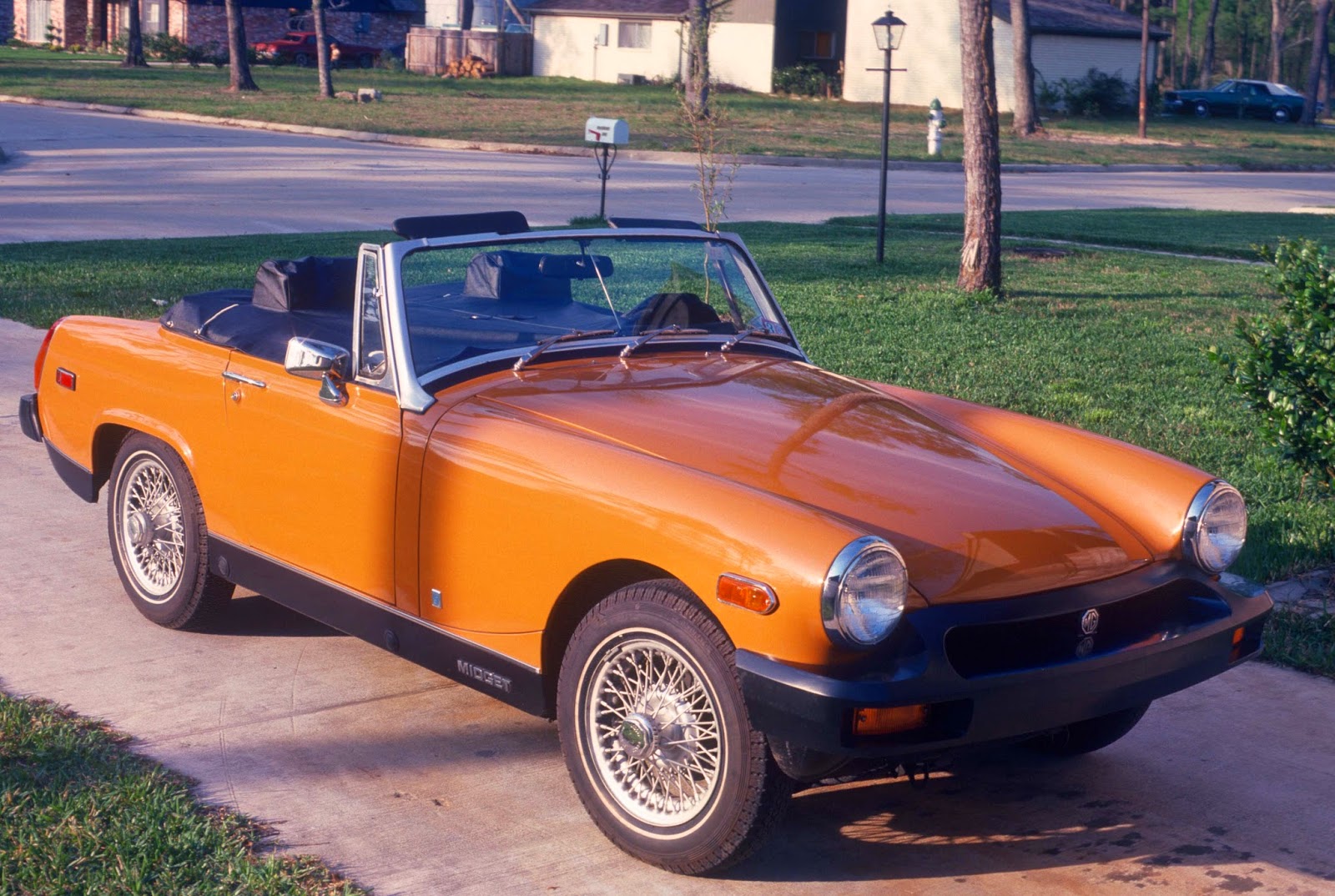
 I know how outlandish it seems to have only $900 towards a car, but times were definitely different. In 1975/6 I traded my beat up '67 Mustang Fastback towards the purchase of my first foreign sports car - a NEW MG "Midget". Before tax, the price was around $5900.00 (several years later I kicked myself for not buying one of the first Mazda RX-7's at $6k which increased by $4k in only a couple years). 


I guess you might think of this as an anti 2-way radio kinda car but I took several road trips from Texas to California in this, along with my E.F. Johnson Viking 352, working 5 watt Dx around the world.


Thursday, August 15, 2019

YOUTUBE SURFING WEEK OF AUGUST 12, 2019 PT.2


As I mentioned in my post from the 12th I went on a CB Radio advertisement bender on YouTube that was bound to take up so much room that this weeks "YouTube Surfing" would be more than one part. Towards the end of this posting I also have cool 'REMCO' AM broadcast kit-for-kids, so let's begin -


Here's more from actor Chuck Napier


IN THIS COMMERCIAL A ROYCE RADIO TAKES A BEATING


A CB RELATED BUD LIGHT COMMERCIAL WITH WILL FERRELL


EARLY 70’S MEGO STAR TREK WT AD


 HE'D GIVE A BUTTLOAD OF MONEY FOR A WALKIE-TALKIE


YES YOU TOO COULD HAVE BEEN A REAL RADIO ENGINEER


Enjoy the weekend!