Friday, March 15, 2013

AN UNLIKELY SUBJECT:

"ARE YOU A SURVIVALIST?"

[PART ONE]


PICTURE BORROWED FROM THIS SITE
  We hear about them, we read about them, but have you ever asked yourself if you were a survivalist?

The answer, of course, is that all of us are survivalists in our own way. Today, we work at jobs to make money which provides us with goods required to survive.

By definition via the Merriam-Webster dictionary we get:

sur·viv·al·ist [noun]
a person who advocates or practices survivalism; especially : one who has prepared to survive in the anarchy of an anticipated breakdown of society
survivalist adjective

"an anticipated breakdown of society.." - This falls into a wide scope, from providing for your family, to underground bunkers stocked with food and other items. Every year many portions of America becomes survivalists whether it be flooding, tornado's, hurricanes, heavy snow fall, or a failure in the power grid. The question is: "How many of you are prepared?"

Some of us may store some extra water, batteries, flashlights and perhaps a am/fm radio; but there is so much more you could do - just in case.

Even in the most usual type of disaster (Tornado, Hurricane, etc.) one thing becomes clear - your cellphones and Internet-linked computers are virtually useless. Telephone poles are usually down, so you can't count on that, and in many cases you won't have electricity either. How do you plan to survive? Do you even have a plan to survive that every family member knows of? How long will your rechargeable devices, fresh water, food, and other supplies last? Tough questions.

Sometimes humans pool together to help one another, while other times it gets nasty and the dark side of human nature pits one against the other.

Much like a "Will", which covers things cleanly after you depart this world, you should have a well thought out plan for life, because when it becomes "everyone for themselves", you'd wish you had one in hand.

There are the usual things you can do:
  • Store batteries with the different sizes you require, just remember to use them as needed so you can replace them with fresh batteries. Same goes for food and water (water jugs are okay as long as they aren't stacked on concrete - above concrete is okay).
  • If you or someone in your family requires medication, make sure you have a box "ready-to-go". Use it up, and as it's refilled put the newer meds in the box. You may as well throw in bandages, gauze, and other supplies as well.
  • Look into portable generators that run off gasoline. Some of these are a lot quieter than you would think.
  • Do some research and buy a combo radio, like the Kaito Voyager KA500 pictured below.
What makes it special?


  • When the Unexpected happens You Better be ready - 11 Bands + NOAA Weather Alerts + Shortwave.
  • 11 bands - AM/FM, Shortwave SW1 & SW2 plus 7 weather bands Durable Construction: Manufactured to be water resistant & has a rubberized body
  • It's 4 Way Power source is very important: You can recharge this via Solar, or the hand crank, 3 "AA" batteries (not incld), AC Adapter (not included) AND, it has a USB port for charging things that charge via USB
  • 5 LED Reading lamp for Camping & Emergency, Includes power Tips for most Cell Phones
Not bad for under $50.
  • Buy some old CB radios, mobile (car) and portable (handheld). Picking them up used is fairly inexpensive and assures you that you and your family can communicate between each other until Cell towers and electricity is online again.
  • Study and get your HAM license. It's not hard; there's no code requirement any longer, and many young people are getting licensed now. I'd still do the first option with CB radios, but HAM radios will give you greater opportunities. For instance, you can buy VHF/UHF handheld radios or HF (High Frequency) transceivers that will allow you to talk around the world - or to your local emergency coordinators.
  • Once you get a HAM license, join the emergency groups - you'll get a lot of good info.
  • If you don't have one, it would be a good time to buy a weapon or two and ammunition. You don't have to go crazy but, it's not going to kill ya to go to the range now and then and practice, or even take a Saturday and get your concealed handgun license. I'm not proposing you go out and purchase assault weapons, however a shotgun or two and several hand guns wouldn't be out of line when it comes to protecting you, your family, and your property.
Yes, this is an unlikely topic for this Blog, however I named it what I did so I could write about any subject I chose to. There more to write about this subject which I'll include in Part 2.

'Nuff Said,
Woody

BTW: if you ever have a problem viewing one of my blogs, try an alternate view, like TIMELINE or another web browser like Fire Fox or Chrome.

Tuesday, March 12, 2013

REVIEW:
BAOFENG UV-5R+
[PART ONE]


A crop of unknown brand/Chinese 2-way electronics have been popping up with more frequency. This particular model, the Baofeng UV-5R+ was made specifically for 3 online vendors (Ebay, Amazon, and-i-forgot-the-last-one). I encountered this model on Amazon.com, and it seems to vary in price; either $49, or $54.99. Compare either price to any low end Yaesu, Icom, or Kenwood and you'll find a vast difference in price.

A Fairly complete list of features would be:

Frequency Range: 136-174 / 400-520 MHz


Dual-Band Display, Dual Freq. Display, Dual-Standby

Output Power: 4w/1w

128 Channels

50 CTCSS and 104 DCS

Built-in VOX Function

1750Hz Burst Tone

FM Radio (65.0MHz-108.0MHz)

LED Flashlight

Large LCD Display

High /Low RF Power Switchable

25KHz/12.5KHz Switchable

Channel Step: 2.5/5/6.25/10/12.5/20/25/50 KHz

Dual band, dual display, dual standby

A/B band independent operation

128 groups channels storage

The manual is lacking quite a bit, but I've found some of our more established vendors coming out with a new product and a crappy manual. I read what I could find on the web about it, including my favorite "Go-to" review site - EHAM.NET REVIEWS as well and figured it would be much easier configuring this thing with the software and cable (an extra $10 at the time).

As usual, it arrived packed in an Amazon box in two days, and when I opened up the Baofeng box I found a dualband HT that looked less toy and more Ham-like. It was partiall charged but I popped it into the stand up charger anyways.


FITS INTO MY HAND JUST FINE

Once charged, I compared (receive only) with my VX-6R and found that they were both close, however the UV-5R+ did seem to pick up the local repeater I used in some places I could never get the Yaesu to do.

The software and cable are kinda weird. The software being very basic, and try sticking to the same USB port each time, or you'll have to set aside another one as a COM port. If you've heard that the cable doesn't fit quite right, you're correct. To make a good solid connection while programming the HT it's best to keep one hand firming putting pressure on the cable where it connects to the radio. I hope the external speaker/microphone isn't that bad.

Okay, a taste for now - more later....END PART ONE

'Nuff Said,
Woody

Sunday, March 10, 2013

RADIO INTERFERENCE


I was reading an interesting article about one fellows radio interference (electrical hash) and it was the electronic version I get on my iPad, so any references he made with links I was able to click-and-go-to. Many times this type of stuff is the electric companies fault, but in this case it wasn't.

Watch the interesting video by Sam Rashleigh below to see what I mean -

Friday, March 08, 2013


THE MORNING NEWS


  • Traffic sucks, wherever you are
  • Microsoft blocked 20,000 ARRL member emails
  • Male pattern baldness is now starting in high school
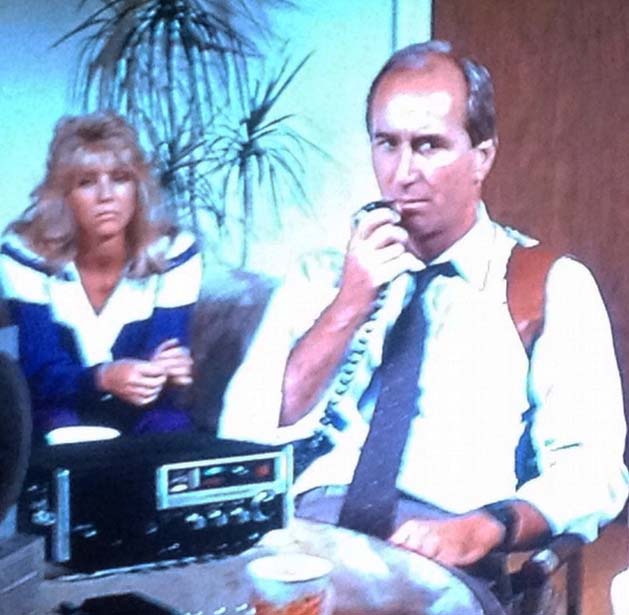
  • In a note of interest about last nights TV episode of "Person of Interest", they were stuck on an Island off New York and while they didn't come out and say it, we were to assume it was "Sandy". The person of interest's police contact called the Island police station on the emergency police frequency and while it was only a quick shot, the deputy picked up an E.F. Johnson Turner-style microphone and in the background you could make out what appeared to be an E.F. Johnson 223 CB.

FROM THE "I GOT SLAMMED DEPT."

The ARRL reported a Florida Ham was issued a $25,000 fine for operating on frequencies not licensed for. Apparently he was jamming and otherwise being a nuisance on a frequency used by, in this case, the Florida prison system.


NEW REVIEW COMING: BAOFENG UV-5R+ Dual-band HT

And, that's the news....

'Nuff Said,
Woody

Friday, March 01, 2013


REVIEW:
UNIDEN BEARCAT 980 AM/SSB

[THE END]


Yep, I finally got around with finishing this review, then spent a couple days looking for my review notes - but now I'm ready to spill the beans....

In our last exciting episode I believe I was comparing this to Midland's 79-290, somewhat feature-wise, but mostly the footprint (the space that it takes up in your vehicle) and comparing it to my daily companion: a Cobra 138 GTL 40ch. mobile.

First, the weight difference. Neither radio had mounting brackets or microphone attached, so I was weighing the radio only.  The 980 was (to my surprise) 2lbs. 6oz while the 138GTL came in at 5lbs. 8oz.

I can only speculate that the added plastic and SMD's in the 980 was the reason it was so light weight. Once again, it's weight was similar to the Midland. I spent a week with the 980 in the truck and came up with these non-scientific results using Wilson's "lil Wil" mag mount on the roof of my SUV:

  • Either the receiver was too "Hot", or the Adjacent Channel rejection NOT, but I experienced/noticed an unusual amount of bleed over from channel 19.
  • YES - that damn beep was driving me freaking crazy. Why they couldn't have put an on/off control, and/or volume setting to the beep is beyond me.
  • I never found a perfect visual setting for being able to see everything on the front panel, during mid-afternoon driving time (I have the same problem with my GPS).
  • Receive audio was done with Icom's SP10 external speaker, which I've always used when mobile so it was the only fair choice I had to compare it with the Cobra's, as it too used the SP10. Except for the extra bleed over, I couldn't really tell a difference, although I missed the tone control on the front panel of the Cobra.
  • Transmitting audio seemed about the same. Those that replied to my A/B test were split down the middle - about 50% preferring the Cobra, and 50% the 980.
  • Noise Blanking. When it came to this category I'd have to call it even (which is good, because many transceivers have lousy noise blankers in them).
  • The weather function worked very well, in fact, much better than any other CB I've had with a weather reception feature.
  • The purchase price was very reasonable.
  • That's about it. The only really BIG question is: "How long will this last?" My Cobra is about 35 years old and still working fine. I don't expect the 980 to do the same, but it would be nice to buy a new rig and have it last longer than a year or two before it's junked.
SUMMARY -

In some respects the Uniden Bearcat 980 surprised me, because if you're a regular reader of this Blog you know that I'm not a big fan of anything made in China. The fact that it's not as deep as a full-sized rig may help those with limited mounting positions/space, but they'll have to take the daylight driving vs. seeing the screen into consideration as well when choosing a mounting location. Perusing the Internet via Google I found a mod to kill the beep, but no one replied that they tried it too and it worked, so I'm still dubious about that one, and really, that's about the only Mod I found for this transceiver. If I were in the market for a new AM/SSB rig I would definitely consider this one (and probably buy it), but I'm not, so the 138 is back in it's usual spot in the truck.

'Nuff Said,
Woody


Note: Updated May 2026 with verified historical link corrections

Tuesday, February 12, 2013

IT'S
MADNESS THEY SAY
[Another review before another is finished]


This one is easy though, it's the SIRIO 11/10 meter mobile antenna which has a PL-259 mount and is sold separately from it's magnet. I know you've heard for years (especially if you only started out in the late 80's that "WILSON" was THE brand if you wanted to get your signal out. I used a Wilson 1000 from the mid-80's until around 1995 when I was writing some stuff for "Copper Electronics" and they were sending me stuff to checkout. One of these was the antenna that soon became my choice, although it's name "Big-Bubba" didn't.

My SWR settings were as good or better than Wilson's, as were many of my contacts (you'll find my review of it on the website - pre-blogging you know), anyways I switched and bought a second one from a vendor on the West Coast and then they just dried up. To my misfortune, the last one I had was no longer to be - but I knew I'd find a clone of it some where else as I'd seen on back around 2004.


This decades old clone is by Sirio (Sirio 4000) [ed. - and famous for cloning decades old antennas]. Like the other two before it, sold separate from the mount. If you're more for mag mounts I wouldn't buy the Sirio. I'll take a guess and say it was as bad as the "Big Bubba" mag mount, and tell ya to buy Diamond's, or Wilson's mag mount with an SO-239 connection and let it go at that.

As you can see, just like the others, the SIRIO can be set at an angle or completely horizontal to fit into the garage. They make a variety of other antennas, including an interesting mobile 6m/2m that looks like a little brother of this one.

You can find these sold at many places like Amazon.com and Newegg.com, as well as several other places on the web.

'Nuff Said,
Woody


Sunday, February 10, 2013


UNSUSPECTING BUYERS GET GOUGED WHEN A NEW PRODUCT COMES OUT


Case in point, and coincidentally a radio in the family of new Uniden/Bearcats that I'm reviewing, is the Uniden/Bearcat 880. I've seen 'em clocking in with prices between $115 and $200 usually, and you could just about pick any amount within that price range and you'd hit one of them but this one I ran across (besides the description) was a tad........strange. Perhaps it's me, but I'll let you judge:


After the price, you'll notice what the model number the radio is listed as, followed by the sellers reason for doing so under the description field -

"First, you are purchasing a Uniden Bearcat 880, not a Uniden Bearcat Pro PC78L, as you can tell by the pictures. This was the only way I could list this radio, EBay doesn't have the info on the 880.

I'm listed as or under gshope - God - status - Human - On - Planet - Earth on EBay. Many believe in a ' True God,' any Spirit Force helping you out would've to be ' God Himself.' In many eyes, making my personal items ' God Himself ' personal item being offered onto the Global Markets. You see how easy this is.

I'm not going to write a book here, laying it all out. Do you have any desire to try to get rich. Many after being allowed to witness all the dots, would come to see, in many eyes its worth alot more. Many on Planet Earth would love to have bragging rights to one of my personal items."


I've seen some strange auctions, and I'm not sure where this one fits in, but it has to be in the TOP TEN.

'Nuff Said
Woody

Wednesday, February 06, 2013


UNIDEN BEARCAT 980 AM/SSB MOBILE REVIEW

[PART 3]


One of the first things you notice when taking the radio out of the box is it's size (smaller than a Grant), in fact, it reminded me of another radio I've owned and reviewed in the past - Midland's 79-290 AM/SSB mobile rig. I didn't have the actual size of the Midland to compare with, but I think these two are fairly close in their respective "footprint".


LAYOUT VERY CLOSE TO 980


While the 980 does not have a removable front panel, the layout is strikingly close as well. Both radios have the Volume/Squelch control at the top-left of the front panel and the microphone plug below it. A set of horizontal buttons run across the bottom where, in the bottom right corner, you'll find the coarse/fine clarifier control and above it the channel selector knob. I guess if you've never held the Midland the similarities in physical size and control layout wouldn't be so obvious.

I'm not inferring that these are the same radios on the inside - The 79-290 came out in the early/mid 1990's, had dual finals, and a removable faceplate; features completely different than the 980, as well as being fairly easy to modify for expanded frequencies, FM, and a open clarifier. Nonetheless it's something to wonder about....."Did the company that won the bid to make the 79-290 also win the bid to make the Uniden Bearcat 980?"

As others have commented before, this is a good looking radio - right out of the box, but doesn't have that "rugged" feel to it. Give it six months in your vehicle and it won't look like the girl you took to the dance, the black plastic will show dust, dirt, and scratches easily. Used at home with a power supply, unless you own a cat that always finds an itch to scratch, it should maintain the "newness" factor longer than if it were in your car or truck.

I've read about low SSB output straight out of the box on some models, and how to adjust it internally, as well as that infernal beep - which I'm pretty certain is fixable now. I don't mind that it's a straight 40 channel rig because I usually run a 40ch AM/SSB mobile in the truck along with my HAM gear - I just hope it's on frequency when I get it powered up [perhaps Sunday I'll have a chance to clear off some bench space and do some initial testing].

As far as microphones go, I may use the factory mike and call it a day, or use one of my dependable, yet older, microphones - but I'll have to test the factory mike first. Back in the 90's I owned a Uniden PC-122 am-ssb mobile. It was a little tiny thing compared to anything else available, and I did a audio test with a friend of mind using an Astatic D-104m, a Turner +3 hand mike, and of course the stock microphone which came with the PC-122.

The winner? The stock microphone on the PC-122. My friend said he had never heard me sound so natural on sideband in all of our years to communications and that I'd better not replace the stock mike. I took his advice and during the period I owned it, I received many questions like "What kinda mike are you using 'cause it's one of the best sounding microphones I've ever heard", and other similar comments. No one believed me when I told them it was just a stock mike on a Uniden PC-122, so here's to crossing my fingers that I'll get the same results with this one.

'Nuff Said,
Woody

Tuesday, February 05, 2013


UNIDEN BEARCAT 980 SSB REVIEW
[PART TWO]


We're on PART II of this review, and I expect it to have many parts [ed. - "many" = more than 3]. In my haste to get Part 1 off, I should have proof read it AND used my reading glasses because I never saw the tiny frequency readout under the large channel number, so I sit corrected.

I've yet to dive into any reading material, so I may have to correct myself another time - we'll have to see about that, or what time I will have to read. The radio has a channel 9/19 push button switch, which has been around forever (or maybe it just seems that way), and except for traffic from Mexico or further South, I've never heard anything useful on channel 9 for decades.

Some radios I've run across let you set another channel for channel 9, like the local hangout channel, and I do like being able to jump to 19 for a quick update on traffic from time-to-time. With this rig, being computer controlled, it would have been nice if you were (for example) on ch.38 LSB and switched to channel 19 that it would be smart enough/or programmed to change the mode from sideband to AM for you automatically and then back again when you return to 38 LSB.

Much like a Blogger, or anyone who writes regularly, they should have proof-read the box the radio comes in. For instance it has three modes: AM, USB, and LNB. I know I've been away from buying new rigs for awhile so maybe there is an "LNB" mode, but I doubt it. As far as the color schemes go, to be specific, you have 7 options, and I like the fact that it has a 9' cord on the hand microphone. While we're on things I like, I may as well mention the adjustable Backlit control. As for the physical outlay it is just "okay". Depending on how and where you mount it depends on whether or not it is more-or-less "okay" with you.

The ON/OFF, squelch/volume control is located on the top left side of the front panel with the microphone jack being just below which is convenient but I would have arranged the placement of the push buttons differently. Along the bottom of the panel you have push buttons for:
  • S/RF/SWR Calibration
  • CB/PA
  • Mem/Scan
  • 9/19/Normal
  • ANL/NB, and
  • AM/USB/LSB
Above the AM/USB/LSB button you'll find buttons for:
  • Weather
  • Mic Gain
  • RF Gain, and
  • Talkback
These are farthest away from your reach, in a typical under the dash mount so I would have preferred the bottom row to be (in this order):
  • AM/USB/LSB
  • ANL/NB
  • Mic Gain
  • RF Gain, and
  • 9/19/Normal
With the remaining buttons along the right side, farthest from your reach, but not necessarily often used, and I'm torn between leaving the on-off/squelch/volume to being on-off/clarifier/volume, and yeah, I'm being a bit picky now. On the box it mentions that the radio is "wireless microphone compatible" and directs you to learn more about it on their website. I learned that there's no picture of it, that it's not available yet, and costs $99.99.

A very nice surprise is the warranty - 2 years. It's not very often you'll see that, so I suspect they don't expect to get many sent back within that period, and I was also surprised to see that they furnished you with a 6-pin to 4-pin microphone adapter as well. There is some slight confusion regarding the clarifier. On the box it states that it's 1.0khz clarifier (+/-), but in the manual it says it's 1.5khz (+/-).

As far as the scan feature goes (usually not any farther than I could throw it), you do get the option to select certain channels for it to scan, thus making the feature worthwhile. Adjacent channel rejection as stated in the manual is 60dB which is better than many CB's made in the last 20 years or so.

And that my friends, ends Part 2 of the review. I'll have to make some room in the truck and figure out where to mount this before proceeding.

'Nuff Said,
Woody

Sunday, February 03, 2013


MULTI-PART REVIEW ON UNIDEN BEARCAT 980 AM/SSB MOBILE CB

[PART ONE]


Uniden pulled out of the am/ssb market a long time ago leaving a large vacant hole. Evidently they have decided to return to the market with the Uniden Bearcat 980SSB mobile. Initial impressions (just looking at the pictures) are that it looks like the typical cheap looking Chinese stuff I've seen pushed on us for decades.


Call me old fashioned, but I prefer a analog s/rf meter vs. the digital ones. Like many CB's sold today, you can play around with color schemes to find one that suits you. It doesn't have any great mods and reminds me of Radio Shack CB's which were pretty darn hard to modify, if at all, keeping their nose clean with the Feds.


FEATURES:

  • Weather - usually this feature is just "okay"
  • Talkback - use it on SSB and die
  • Memory Scan - useless
  • CB/PA - There must still be a function for this, although I've never known anyone that used it.

From reading about half the reviews and doing some digging around I came to three conclusions:

1. The BEEP is annoying, but apparently there is a fix for that out on the Internet

2. Most of these seems to arrive dead-on frequency which you'd really (REALLY) want if you couldn't mod the clarifier for SSB transmissions, otherwise you'd get a bunch of sidebanders kinda angry at ya.

3. Unless someone comes up with anything else, the "Beep" mod is it.


Okay, Review Part 1 is over, I've done a quick glance at it and once I get it in Moby, I'll see what results I get compared to the Cobra 138XLR already in the truck.   Expect updates to occur from time-to-time as I find things I like or don't care for, not to mention performance.   'Nuff Said, Woody

Thursday, November 22, 2012


HAMS, PIGLETS, AND BOARS UNITE!!

"BLACK FRIDAY"
IS
Go TIME


How many times have you received an email from HRO or another company with a BIG sale ($5 off one item, $10 on another)? For one, I guess we all realize that the profit margin is damn slim so it's hard to pull off any great pricing, but I woke this morning to see their Black Friday email in my mailbox and took a look - and I was impressed!

Here are some examples:

  • Yaesu FT-60r Dualband HT - $129.95
  • Yaesu FT-450D - $799.95
  • Yaesu VX-8GR - $299.95
Too bad the FT-817ND wasn't on the sale list, but if you were looking for a 1st, or even 2nd dualbander HT, it's hard to go wrong with the FT-60r (time proven, rock solid).

'Nuff Ho-Ho,
Woody

Monday, November 19, 2012


MY BAD


What do you get when you host several websites, many blogs, are married, and work? Me. A person who (while still scratching the head) couldn't find my website or reach it vs. ftp any longer. How long? Dunno...

I received an email last month from a friend who knows my other email address and sent me one saying it wasn't there, and "Had I given it up?" So I leaped into action! (takes about a month these days to work myself up to get ready for a good "leap").

I looked and sure enough it wasn't there, nor a way to reach it via FTP (I figured my index page was corrupt or otherwise missing, which it was, but it ran deeper than that). After four days of emailing back'n forth between me and my host I finally got it straightened out, and a new Index page in place.

Apologies,
Woody

Sunday, November 04, 2012


DURING A DISASTER, IT'S ALL ABOUT COMMUNICATIONS


I just finished reading a story about the struggle in the aftermath of "SANDY", to get towers back up, and power to them so wireless communications could be restored. If you think about SANDY, or any past major storm that ripped through a wide swath of towns, cities, and States, then you've probably read something similar after every tragedy. If you look hard enough, and depending on who is in-the-know, you'll also see small to large sized articles about HAM radio operators and the service they provide in times of need. From short range communications, to passing information across the country or around the world to let someone know that their family member survived, Ham radio operators are always on the scene.
 
Many Hams have taken courses and become storm spotters for SKYWARN, a program of the United States' National Weather Service. They are trained to know how to describe the conditions they are witnessing:

  • Cloud formations
  • Funnel cloud sightings
  • Hail, and approximate size
  • Lightning strikes
  • High winds
  • Localized flooding
 
All of the time reporting this information to the National Weather Service. When you hear reports on dangerous storms, it's not just radar, but eyes on the ground that help determine what is included in a weather advisory, and Ham radio operators have had a long relationship with the National Weather Service.
 
 
[PHOTO CREDIT - ASSOCIATED PRESS]
 
 Many of these cities have rules prohibiting towers, or outside antennas because they were considered to be ugly by their neighbors - the same neighbors they helped out during and after a Hurricane, Tornado, or other event which made land line phone calls or wireless phones useless. Thanks to the Amateur Radios official organization, the ARRL, some cities have acknowledged the benefits and made exceptions to the regulations.
 
When looking for a nice neighborhood in Texas to live in, you'll find what they call "Subdivisions" with a variety of enticing names, and a home that meets your need [side note - when I moved down to Texas in the 70's, I had never heard of a "Subdivision" before].
  
A home that meets your needs unless, you're a HAM (Amateur Radio Operator). Because before you can purchase the house of your dreams you must sign away your rights to put up a tower, much less an outside antenna because it would ruin the appeal of the subdivision, and upset your neighbors. Yet, it may be the perfect house and location for you otherwise. Unfortunately, doing the same regulation changes in a Subdivision are nearly unheard of - after all, you signed the legal agreement to abide by them when you moved in.
 
Perhaps you have lived in one of these confined neighborhoods for many years and just found out how exciting Ham radio can be, you'll find out in short order about the section in the Subdivision regulations you signed years earlier, prohibiting unsightly objects like towers or outdoor antenna's. You weren't even thinking about Amateur radio at the time you moved there.
 
I've never investigated it, but I've often wondered if after such a disaster, did anyone help push through changes or modifications to either city or subdivision regulations in order to make communications easier in times like these? If not, it's very sad, yet when Mother Nature unleashes another storm upon them, your neighbor, the Ham, the Amateur Radio operator will be there to help once again.
 
That's what Ham's do...
 
 
'Nuff Said
Brian
 
KB5CEJ Amateur Radio Operator

Thursday, October 18, 2012

WHAT IS "RF" ?

[AND WHAT DOES IT MEAN TO YOU?]


WHAT IS RF?
RF stands for “Radio Frequency”, which is used by AM/FM radio stations, Citizens Band radio operators, the Military, HAM radio operators – and YOU! It is a wireless electromagnetic signal which is commonly used for communications of one sort or the other. In the case of a broadcast or two-way radio communications just having a signal is not enough. A transmitter takes your voice (for example) and through a process within the circuitry adds that audio (modulation) to the signal and sends it out.

At the other end, the Receiver is designed to receive the modulated signal, and separate the two so that only audio comes through the speaker. Once again, this is part of a receivers circuitry. Depending on how high or low the frequency is will vary the distance that signal will carry. Usually, the higher up in frequency you go, the more line-of-sight your signal will be (without any special accessories, etc).


[The 2 most common types of transmission are AM and FM. AM (Amplitude Modulation) modulates the carrier, whereas FM (Frequency Modulation) modulates the frequency]
Some of you are old enough to remember modems, and having to wait days to download a file from what was called a “BBS”, as it traveled over the phone wires. If you look at the word “modem” you’ll see that it was called that because it is a Modulator/Demodulator (similar to a two-way radio transceiver), and enough about history and definitions. I just wanted to give a brief description on RF signals because you use them every day, and here are some examples:

  • Cell phone
  • The cordless phone in your house
  • Your car remote
  • Your garage door opener
  • The baby monitor
  • The wireless printer
  • In many cases – your TV remote
  • The wireless router you use to connect laptops, iPads, and other Wi-Fi devices to the Internet
I’ll stop there, although I could come up with other everyday items given more time and thought. I’m sure that by now you’ve realized that RF signals are necessary for any RF wireless device to work, and while invisible to the eye, they are all around us wherever we go.

 COMPUTERS AND RF
 Early wireless routers used the 2.4GHz frequencies and usually you had a choice of 11 channels (really 3 non-overlapping channels) to choose from to avoid interference from a close neighbor using the same channel you were on. The frequency range is what you call “Near Microwave” and is very crowded. You’re sharing it newer cordless phones in your house, amongst other devices.

  
[CLICK TO ENLARGE. The short red mark is where the typical wireless router falls within the frequency spectrum, while the longer red mark is approximately where the 5GHz wireless routers are]
For several years now, Dual-band wireless routers have been on the market. One band remains at 2.4GHz for compatibility. The 2nd band operates in the 5GHz range, often referred to as part of the Microwave Spectrum. Wireless routers with 5GHz capabilities offer more than double the amount of channels to choose from (23 of which are non-overlapping). It’s like a BIG wide freeway compared to the 2.4GHz band.

There are trade-offs:

At 2.4GHz you will achieve a greater signal range, but it’s narrow and crowded. For everyday Internet activities it’s fine though. A 5GHz band signal, while BIG and WIDE, will not be able to travel as far as a 2.4GHz device (remember, the higher the frequency the shorter the range). But because it’s so expansive, it makes the perfect band for streaming video in your house, along with less clutter and crowding. Another distinction is that 2.4GHz supports 802.11B,G, and N, while 5GHz (at this time) only supports “N” (and, I believe the new 802.11ac standard). Also, most wireless computers and tablets are not dual-band so a USB dual-band adapter will be required to take advantage of the 5GHz band.

Every install has its own set of variables: How many other wireless devices are in the house, placement of the router, the number of walls the signal has to go through to reach a desired location in the house, so it’s not just simply a matter of configuring the wireless router, plugging it into the modem and getting full coverage everywhere. Within the next 2 years we will see big changes in regard to Wi-Fi, and as always - radio communications!

'Nuff Said, 
Woody 
KB5CEJ 
PC TECH; HAM RADIO OPERATOR

Monday, October 15, 2012


ANNUAL HALLOWEEN

"PICK YOUR FAVORITE HORROR MOVIES" EVENT


I've moved the movie poll to another one of my Blogs, which you can find HERE. This year I went all out and via 3 side bars (Tabs), this year's choices are the biggest! The list starts in the early 1900 silent era and ends in 2011. I know I missed some, so I'm sorry if one of your favorites isn't on the list.

Woody


Thursday, August 16, 2012


BLINK AND YOU MISS IT


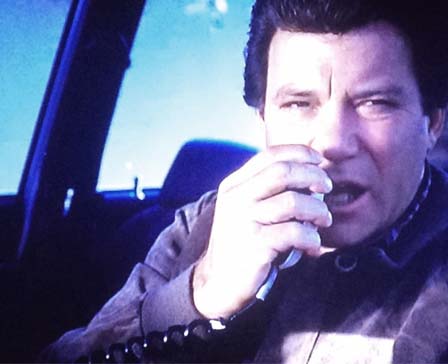
I was watching some episodes of "TJ Hooker" on a cable channel a couple of weeks ago and the plot involved 'ol "TJ" to play nice with the Feds and help them run a sting on a new drug dealer. Naturally things aren't going to go the way they should and shots are fired, one of Hooker's crew is killed, and he's just venting his anger at the Feds while following the suspect.


Of course, because agencies didn't really communicate well between each other, Hooker had no idea that the Feds were using CB's to communicate -


Saturday, July 28, 2012


ARE YOU LEGAL?


The other day I was talking with someone about HAM radio, CB's, and then those little walkie-talkies that you see at Walmart, Best Buy, Amazon, etc. He was wondering if he could get some, give his kids a few and keep in touch (after all, many advertise 20-40 mile range).


My answer was mixed. Under ideal conditions, with one child strapped to a two story roof 6 miles away, and the other, chained to the chimney on top of another 2-story house it would be possible to achieve 6 miles. 20 miles? no. Many of you have seen these in stores and on Amazon, that are similar to the ones in the picture, any most of them you find with any long range claims will be FRS/GMRS radios. FRS, were usually under $20 radios that the kids could have fun with, and 14 channels to choose from.

GMRS channels (the extra 22 channels) require an FCC license. In almost all of the descriptions I read I didn't see any mention of this.


To get a GMRS license is easy - no test required. All you need is to fill out the license form, be 18 years of age or older, and enclose a check for $85 (good for 5 years).


That's a fairly important part to leave out, especially after you've bought them and been using them for awhile. Because these handhelds operate in UHF (Ultra High Frequency), they are more line-of-sight in communications. Your conditions, and distance my vary. The fact a license is required does not.


[This is actually a cross-post from another of my Blogs, but it is radio related. Not having any radio equipment makes it fairly hard to report conditions, who I talked with, etc. So there has been a large gulf between posts. The book, ah yes, my every-to-published book got pushed aside after getting a new job which left little time for anything else. This may have been a good thing though, thanks to the explosion of digital books. You can download an Amazon "Kindle" App for just about anything (including your PC) and read a book. I've always been a hands-on kinda guy when it came to reading a book, however, I bought a couple and started reading them on my iPad and I think it's great! I've finished one, and I'm slowly getting through the other one (900pg book about George Patton). I've also been in contact with a electronic book publisher, and we're trying to work out some of the kinks in the formatting of my book, which may include re-writing 50-100 pages, but once they say "It's good to go", it's going. You'll be able to find it on Amazon and other sites. Price? At this time, we're planning on $9.99, and will offer one of the chapters downloadable for free, to check it out.]


Woody